By Marcus Wild, Chief Client Officer

What is KiwiSaver?
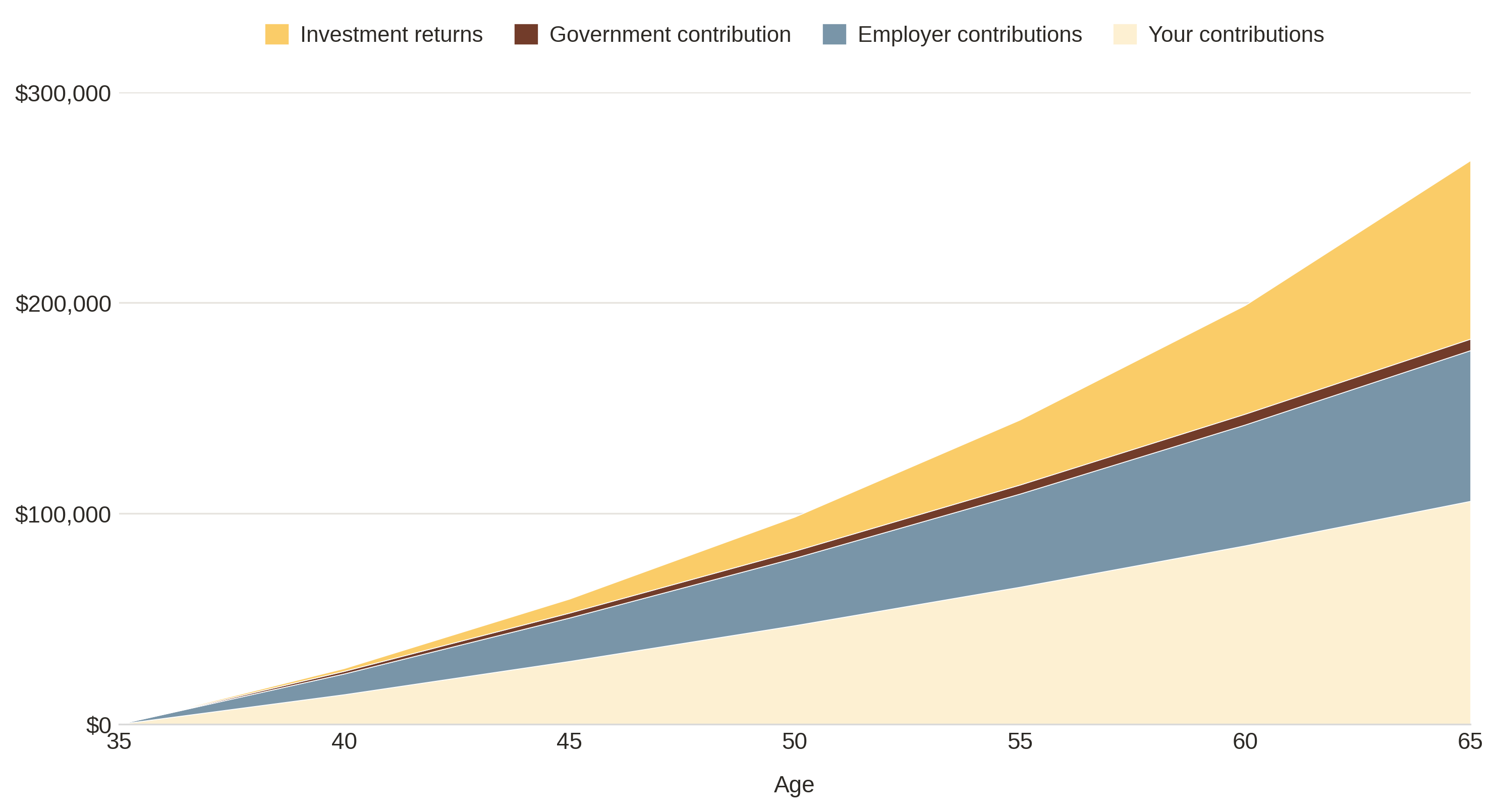
KiwiSaver is New Zealand's voluntary savings scheme designed to help you build money for your retirement and, in many cases, your first home. When you join, your contributions are invested by a KiwiSaver provider, and your balance can grow over time through a combination of your own contributions, your employer's contributions, government contributions, and investment returns.
In short: KiwiSaver is a long-term investment account with built-in incentives that most other savings accounts simply don't offer. Those incentives — employer money and government money added on top of your own — are what make it one of the most effective ways for everyday New Zealanders to build wealth.
Who is eligible for KiwiSaver?
You can join KiwiSaver if you live or normally live in New Zealand and you are a New Zealand citizen or entitled to live here permanently.
There's no minimum age to join KiwiSaver — parents can open an account for their children — though some providers only accept members from age 18. Some KiwiSaver benefits, such as the government contribution and compulsory employer contributions, only apply within certain age and income ranges.
If you start a new job and are eligible, you may be automatically enrolled, with an option to opt out within a set window.
How much should I contribute to KiwiSaver?
There's no single right answer. As an employee, you choose a contribution rate that is calculated on your before-tax pay. The available rates are 3.5%, 4%, 6%, 8%, or 10%. If you don't choose a rate, the default rate of 3.5% applies.
If you're self-employed or not earning a salary or wage, you can contribute any amount you like, whenever you like, as voluntary contributions. A useful rule of thumb is to contribute at least enough each year to capture the full government contribution (if you’re eligible) — because that's effectively free money you'd otherwise leave on the table.
| Contribution Rate | Monthly employee contribution on $72k p.a salary | Annual employee contribution |
|---|---|---|
| 3.5% (minimum, default) | $210 | $2,520 |
| 4% | $240 | $2,880 |
| 6% | $360 | $4,320 |
| 8% | $480 | $5,760 |
| 10% | $600 | $7,200 |
Illustrative example based on $72,000 gross salary.
How do employer contributions work?
If you're an eligible employee — a KiwiSaver member aged 16 to 64 contributing from your pay — your employer is generally required to contribute as well, currently at least 3.5% of your gross salary or wages. Combined with the government contribution, this often means extra money can land in your account from your employer and the government before any potential investment growth even applies.
If you're on a total remuneration package, though, your employer's KiwiSaver contribution may already be built into your agreed salary rather than paid on top — it's worth checking your employment agreement to see which applies.
What is the KiwiSaver government contribution?
Each year the government can add up to $260.72 to your KiwiSaver account — a boost that can make a real difference over time. For every $1 you contribute, the government adds 25 cents, up to that $260.72 cap. To get the maximum, you need to contribute at least $1,042.86 of your own money between 1 July and 30 June. Contribute less than that, and you'll still receive a partial amount, proportional to what you put in.
Who qualifies for the KiwiSaver government contribution?
You're typically eligible if you're aged 16 to 64, mainly live in New Zealand, are contributing to KiwiSaver, and have taxable income of $180,000 or less each year. Only your own contributions — employee and voluntary — count toward that total; employer contributions and amounts transferred in from other schemes don't count.
When is the government contribution paid?
The government contribution is paid into your account after the KiwiSaver year ends on 30 June, usually in July or August.
Can I use KiwiSaver to buy my first home?
Yes. After you've been a member for at least three years, you may be able to withdraw most of your KiwiSaver balance to put toward the deposit on your first home. This can dramatically shorten the time it takes to get onto the property ladder.
To qualify for a first home withdrawal you generally need: to have been a KiwiSaver member for at least three years, to intend to live in the property, to not have made a KiwiSaver first home withdrawal before, and to be purchasing a property in New Zealand. You'll also need to leave a minimum balance of $1,000 in your account, and any funds originally transferred from an Australian superannuation scheme can't be withdrawn either. Previous homeowners may still qualify in some circumstances — Kāinga Ora can assess this.
Because a first home goal usually has a shorter and more defined timeframe than retirement, the way your money is invested during this time matters a lot. The Hive KiwiSaver Scheme offers a range of options that can help with your first home goal including the dedicated Aurora First Home Buyer Strategy for those looking to withdraw for a first home in the next 1-3 years. An Adviser can help you work out what would work for you depending on where you are in your home buying journey.
What are KiwiSaver funds, and which one should I choose?
When you join a KiwiSaver scheme, your money goes into a fund — a professionally managed pool of investments. Funds make investing simple, because you don't need to research individual companies yourself. Your money is spread across a range of investments, which makes it easier to not have all your eggs in one basket (diversification). If you have a KiwiSaver account, you're already investing this way. Funds are generally grouped by how much risk and potential return they carry:
| Fund Type | Risk Level | May be suitable if: |
|---|---|---|
| Defensive | Low | You want stability for your savings, or need to access your money in the short-term |
| Conservative | Low-Medium | You're looking for relatively stable returns and want fewer ups and downs along the way |
| Balanced | Medium | You're looking for a balance of growth and stability and are comfortable with some ups and downs along the way |
| Growth | Medium-High | You're aiming for strong long-term growth and are comfortable with some ups and downs along the way |
| Aggressive | High | You're aiming for maximum long-term growth and are comfortable with significant ups and downs along the way |
The most important factors in choosing a fund are your timeframe, your goal (first home vs. retirement), and your comfort with risk (the potential for your balance to go down as well as up). The Hive KiwiSaver Scheme brings together four specialist fund managers — Aurora Capital, Harbour Asset Management, Pie Funds, and Munro Partners — so you can choose an option or a mix of options that fits your situation.
Do I pay fees to invest in KiwiSaver?
Yes, all KiwiSaver schemes charge fees. Fees are usually charged as a percentage of your balance. It’s important to understand what services you are getting for those fees and the fact that fund performance is typically reported after fees have been taken into account.
With Hive KiwiSaver Scheme, one of the benefits you get for the fees you pay is advice. On top of running the scheme day to day, they cover the servicing and advice fees for your Financial Advice Provider — so getting guidance doesn't cost you anything extra. That's real value, built into the price you're already paying.
The fees you pay depend on which funds make up your Plan.
| Fund / Strategy | Estimated* annual fund charges |
|---|---|
| Funds | |
| Hive Aurora Liquidity Fund | 0.40% |
| Hive Aurora Conservative Fund | 1.25% |
| Hive Harbour Balanced Fund | 1.40% |
| Hive Aurora Growth Fund | 1.50% |
| Hive Harbour Growth Fund | 1.50% |
| Hive Pie Growth Fund | 1.50% |
| Hive Pie Aggressive Fund | 1.60% |
| Hive Munro Global Growth Climate Leaders Fund | 1.60% |
| Hive Aurora Aggressive Fund | 1.60% |
| Strategies# | |
| Aurora First Home Buyer Strategy | 1.04% |
| Aurora RetirementPlus Strategy | Varies depending on age |
#Fees shown are indicative and depend on how investments are allocated across the underlying Hive Aurora funds. The RetirementPlus allocation and annual fund charge vary depending on age. *Part of our annual fund charge is an estimate covering variable costs and any performance fees charged within the underlying funds an investment manager invests in. These are our best estimates, based on information from those investment managers and their disclosure documents.
How do I check and understand my KiwiSaver account balance?
Your KiwiSaver account balance is simply the total value of your investment at a given point in time — the sum of everything contributed plus or minus investment returns, fees and tax. Because the underlying investments change in value daily, your balance will naturally rise and fall, especially in higher risk options like Growth and Aggressive funds. The key is to focus on the long-term trend rather than day-to-day movements.
The most useful habit is to connect your balance to a specific goal — for example, "$120,000 for a first home deposit in three years" — so you can see your progress in context. Hive is built around this idea.
Can I change my KiwiSaver provider or fund?
Yes. You can switch funds within your scheme or move to a different provider. Because Hive offers a multi-manager KiwiSaver scheme, you can invest your savings across four different fund managers without switching out of the Hive KiwiSaver Scheme.
When should I talk to a Financial Adviser about KiwiSaver?
You don't need to figure KiwiSaver out alone. It's worth talking to an Adviser when you're choosing or changing a fund, planning a first home withdrawal, getting closer to retirement, or simply unsure whether you're on track. With Hive, you can connect with experienced Advisers wherever you need.
KiwiSaver FAQs
Is KiwiSaver compulsory?
No, KiwiSaver is currently voluntary. However, if you're not already a member, you'll be automatically enrolled when you start a new job, with the option to opt out between weeks 2 and 8 of starting that job. Once that window closes — or if you joined directly rather than through an employer — you can't opt out. Your account stays open, though you can apply for a savings suspension if you want to pause contributing.
Can I join KiwiSaver if I'm self-employed?
Yes. You can join and make voluntary contributions of any amount, and get the government contribution if you meet the eligibility criteria.
Can I open a KiwiSaver account for my child?
Yes. Children can be enrolled, helping them benefit from decades of long-term growth, though some incentives only apply once they're older. Not all KiwiSaver providers offer accounts for children — Hive KiwiSaver Scheme does.
Can I have more than one KiwiSaver account?
No, you can only belong to one KiwiSaver scheme at a time, although most providers allow you to split your savings across different funds within a scheme. Switching providers is easy, but you can't be a member of two schemes at once. As Hive is a multi-manager KiwiSaver Scheme, you can switch between fund managers without having to transfer to a new scheme.
Does my employer contribution count toward the government contribution threshold?
No. Only your own contributions count toward the amount needed to unlock the maximum government contribution.
When is the government contribution paid?
The government contribution is paid into your account after the KiwiSaver year ends on 30 June, usually in July or August.
Can I pause my KiwiSaver account contributions?
Yes. Once you've been making KiwiSaver contributions for 12 months, you can apply via IRD for a savings suspension of between 3 months and 1 year. However, a savings suspension stops your employer's contributions too. Unless you make voluntary contributions during that time, you may also miss out on some or all of the government contribution for that year.
What happens to my KiwiSaver account if I move overseas permanently?
You can leave your KiwiSaver savings invested, or after 12 months you can apply to withdraw most of your balance (government contributions are excluded and repaid). If you're moving to Australia, early withdrawal isn't an option — but you can transfer your balance, including government contributions, to an Australian superannuation scheme that accepts transfers from KiwiSaver (subject to eligibility criteria), with no 12-month wait required.
What happens to my KiwiSaver account if I die?
Your KiwiSaver account balance becomes part of your estate and is paid out according to your will, or under intestacy rules if you don't have one. You can't nominate a beneficiary directly through your KiwiSaver account, so it's worth including in your will.
What happens to my KiwiSaver at retirement?
Once you reach the qualifying age of 65, your account is unlocked — but there's no obligation to withdraw straight away. You can withdraw your full balance, leave your savings invested and access them whenever you need to, set up regular withdrawals for an ongoing income, or make one-off withdrawals for specific costs like travel or home improvements (minimum withdrawal amounts apply). Many people also transition toward lower-risk fund options beforehand to protect their savings.
This article is general information only and not personalised financial advice. For personalised advice you can contact a Hive Adviser who will be happy to help. Hive Funds Limited is the issuer and manager of the Hive KiwiSaver Scheme. A PDS is available here.